It is a severe, lifethreatening syndrome. It activates blood clotting cascade causing:
- Microvascular thrombosis (clotting)
- Consumption of platelet and clotting factor (bleed)
Pathophysiology
DIC is caused by:
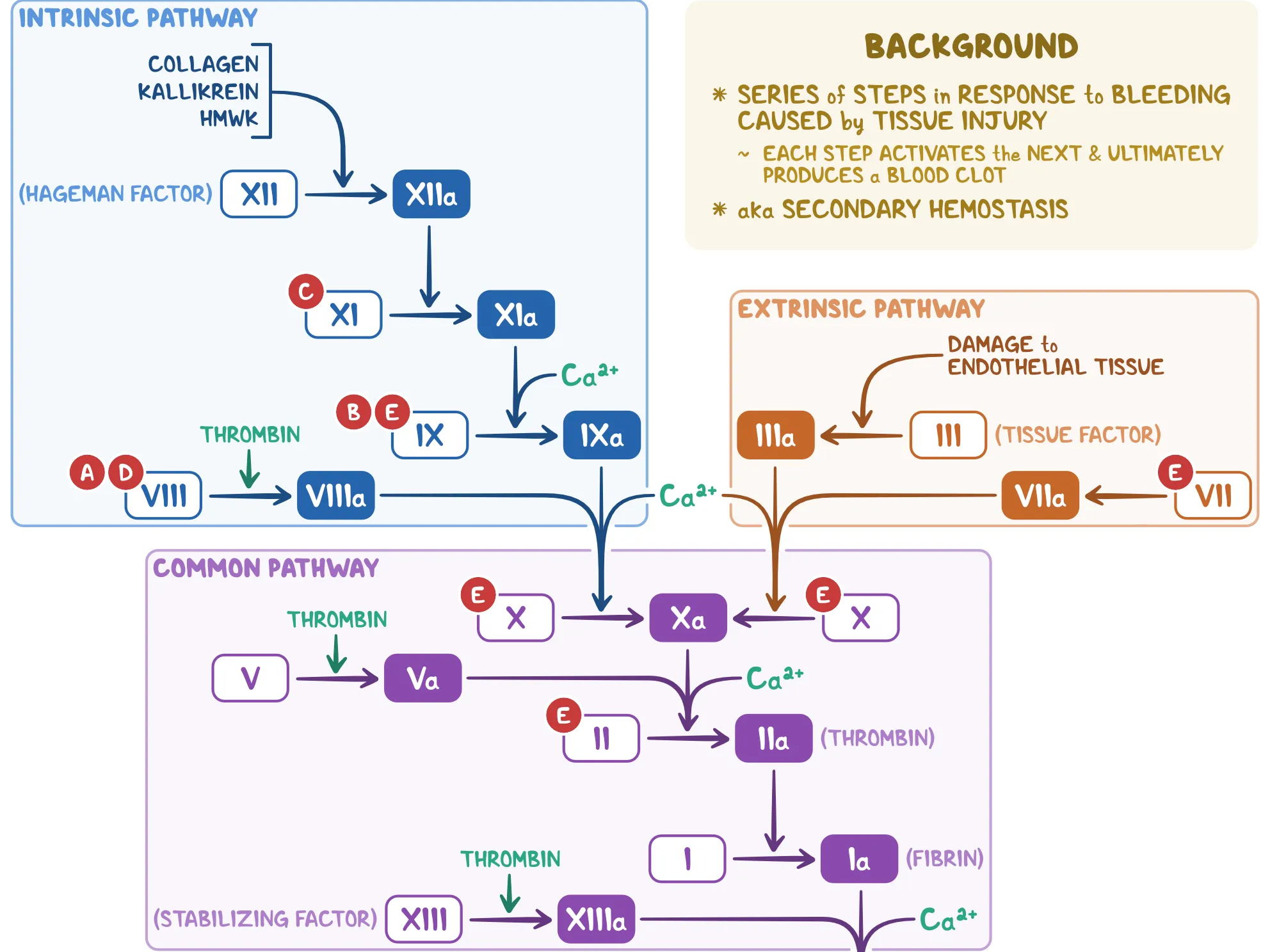
- Exposure to tissue factor (procoagulant), which binds to Factor VIIa and activates the extrinsic pathway. Causes include severe trauma, obstetric emergencies, and cancer (e.g., acute promyelocytic leukemia).
- Widespread endothelial injury causing immune cells to express tissue factor and stop production of natural anticoagulants (protein C). Causes include sepsis.
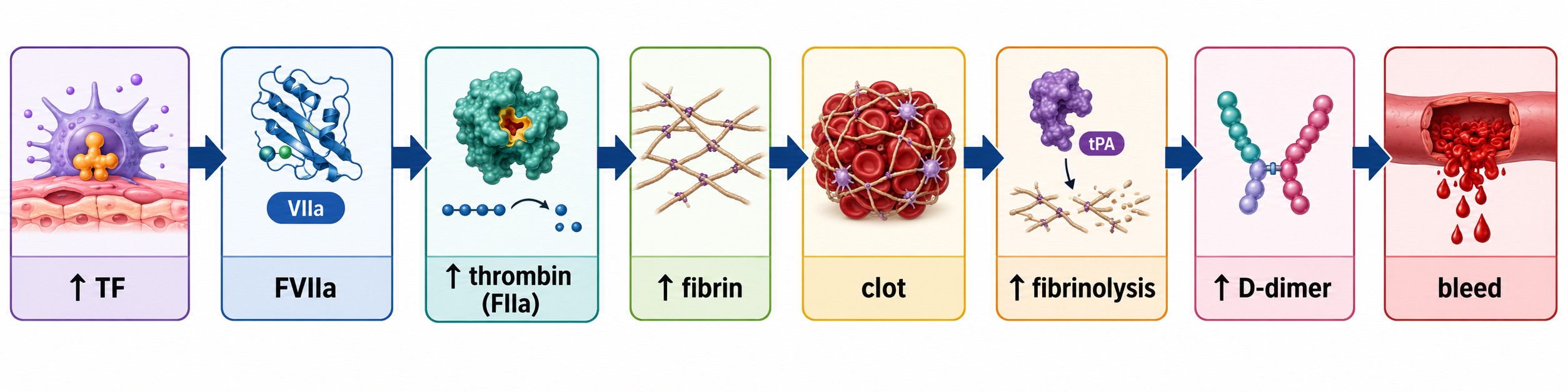
Laboratory abnormality: ↓ platelet – ↑ PT – ↑ PTT – ↓ fibrinogen – ↑ D-dimer
Complications
- Acute kidney injury
- Acute respiratory distress syndrome
- Venous thromboembolism (DVT, PE)
- Bleeding
Risk factors
- Malignancy
- Severe infection and sepsis
- Trauma
- Obstetric complications
Management
- Remove/treat underlying triggers (sepsis, trauma)
- Supportive Transfusions in primarily in acute, bleeding DIC to replace depleted components
- Fresh Frozen Plasma (FFP) to replace coagulation factors
- Cryoprecipitate for fibrinogen <1 g/L with bleeding1
- Cryoprecipitate contains concentrated Factor VIII:C, von Willebrand factor, fibrinogen, Factor XIII, and fibronectin and is produced by further processing of Fresh Frozen Plasma (FFP)
- Platelet transfusions for low platelet (<50,000 cells/μL in DIC)2
- Anticoagulation in specific cases where thrombosis and organ ischemia dominate (or for chronic DIC in cancer patients), low-molecular-weight heparin (LMWH) may be cautiously utilized to halt the explosive cycle of thrombin generation.
- Cryoprecipitate Transfusion – Guideline for Practice. 2022. https://www.pch-pathlab.com/cms/sites/default/files/documents/Cryoprecipitate%20Transfusion%20-%20Guideline%20for%20Practice%205.pdf ↩︎
- Platelet Transfusion. StatPearls Publishing LLC. Last Update: June 6, 2024 https://www.ncbi.nlm.nih.gov/books/NBK560632/table/article-27318.table0/?report=objectonly ↩︎